Too many designs on the Gold Coast rely on disturbed samples or SPT correlations alone, only to find later that settlement predictions miss the mark by centimeters. The problem is that loose sands and soft estuarine clays in areas like Broadbeach and Southport lose their true fabric the moment a standard split spoon hits. We see contractors order thick mat foundations when a properly cored Shelby tube would have shown higher strengths and saved concrete. Our team recovers undisturbed samples using thin-walled Shelby tubes pushed at controlled rates, preserving the in-situ density and moisture content that laboratory triaxial tests depend on for reliable results.
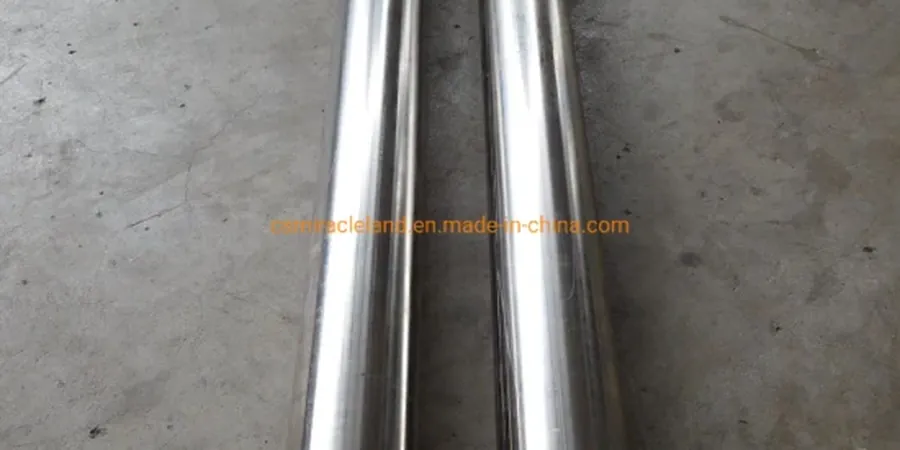
A properly recovered Shelby tube sample preserves the exact void ratio and fabric that governs long-term settlement in Gold Coast's sandy coastal soils.
Methodology and scope
Local considerations
Gold Coast expanded rapidly from the 1980s, filling mangrove swamps and dredging canals for waterfront estates. That legacy means much of the city sits on soft Holocene clays and loose sands prone to consolidation. Designers who skip undisturbed sampling assume uniform behavior, but these soils vary drastically over a few meters. A Shelby tube sample reveals the true pre-consolidation pressure and compressibility that SPT correlations simply cannot capture. Without it, differential settlement in structures near the Nerang River or canal estates becomes a recurring liability that costs far more than the initial investigation.
Applicable standards
AS 1726:2017 – Geotechnical site investigations, AS 1289.6.1.1 – Methods for soil strength tests, AS 1289.6.0/D1587M – Standard practice for thin-walled tube sampling
Associated technical services
Standard Shelby Tube Sampling
76 mm diameter thin-walled tubes pushed hydraulically to depths up to 20 m. Suitable for soft clays and loose sands. Includes field moisture content determination and visual classification per AS 1726.
Deep Undisturbed Sampling with Piston Sampler
102 mm fixed-piston sampler for depths exceeding 20 m or where borehole stability is poor. Piston prevents soil column loss during withdrawal and delivers near-100% recovery in cohesive soils.
Typical parameters
Frequently asked questions
What is the difference between undisturbed and disturbed sampling?
Undisturbed sampling retains the in-situ structure, void ratio, and moisture content of the soil. Disturbed samples (e.g., from SPT spoon) lose fabric and are unsuitable for consolidation or strength tests. Shelby tubes preserve the natural state required for triaxial and oedometer testing.
How much does Shelby tube sampling cost in Gold Coast?
The typical cost ranges between AU$690 and AU$1,640 per sample, depending on depth, tube diameter, and site access. This includes field recovery, sealing, and transport to the lab. Bulk volume discounts apply for multi-sample programs.
What soil types are suitable for Shelby tube sampling?
Shelby tubes work best in cohesive soils like clays, silts, and some organic deposits. Loose sands can be sampled but require careful technique to avoid disturbance. Gravelly or cemented soils damage the tube and are better sampled by coring.
How is the sample preserved after extraction?
Immediately after withdrawal, the tube ends are sealed with hot wax and plastic caps to prevent moisture loss. Samples are labeled with depth and orientation, then transported upright to the lab. Storage temperature stays below 25 degrees Celsius to minimize biological degradation.
What tests can be performed on an undisturbed Shelby tube sample?
Common tests include consolidated undrained triaxial (CU), unconfined compressive strength (UCS), oedometer consolidation, and permeability. The preserved fabric allows determination of pre-consolidation pressure, compression index, and effective stress parameters critical for settlement analysis.