Gold Coast's coastal geology presents a mix of Holocene beach sands, estuarine silts, and Quaternary alluvium — all highly permeable materials that demand precise infiltration measurements. The city's average annual rainfall of 1,300 mm and frequent storm events make permeability data critical for drainage design. Infiltration testing with Porchet or double-ring infiltrometer methods provides the field permeability values needed for soakwell sizing, on-site detention basins, and green infrastructure. Urban infill projects in suburbs like Southport and Surfers Paradise often encounter shallow water tables (1–3 m depth), requiring careful test placement to avoid groundwater influence on results.
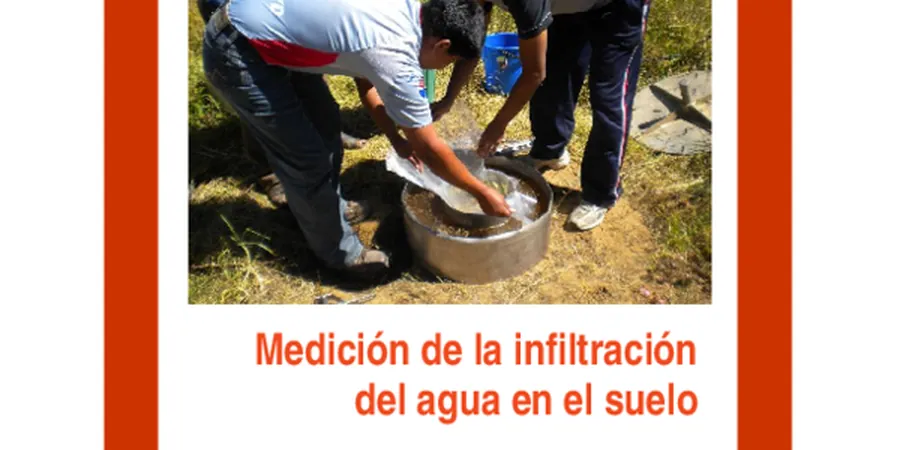
Double-ring infiltrometers in Gold Coast's coastal sands yield Ksat values of 30–200 mm/h, but estuarine clays can drop below 5 mm/h — a 40-fold variation across a single site.
Methodology and scope
Local considerations
A common oversight in Gold Coast projects is relying on a single infiltration test per lot. Sandy soils in the northern suburbs (Helensvale, Coomera) can vary from coarse dune sand to fine silty sand over a few meters — one test hole might show 80 mm/h while another 30 m away reads 10 mm/h. The risk is undersized soakwells that fail during a 1-in-10-year storm, leading to surface ponding, foundation moisture issues, and council non-compliance. For subdivisions on former swamp or canal estates (e.g., Carrara, Benowa), we always recommend a minimum of three double-ring tests per hectare to capture spatial variability.
Explanatory video
Applicable standards
AS 1726-2017 Geotechnical site investigations, AS 1289.6.8.1 Standard test method for infiltration rate of soils in field using double-ring infiltrometer, AS 4678-2002 Earth-retaining structures (infiltration effects on stability), Queensland Urban Drainage Manual (QUDM) — infiltration design guidelines
Associated technical services
Porchet Infiltration Testing
Falling-head test in 100–200 mm diameter augered holes, suitable for shallow permeability assessment in sandy soils. Ideal for residential soakwells and minor drainage works in Gold Coast suburbs with well-drained sands.
Double-Ring Infiltrometer Testing
Constant-head method using inner (300 mm) and outer (600 mm) rings to measure one-dimensional infiltration rates. Required for council stormwater compliance in medium-to-large developments and greenfield sites.
Permeability Profiling & Reporting
Combined infiltration testing with soil logging and laboratory permeability (falling-head / constant-head) to correlate field results. Delivers design Ksat values with statistical confidence for Gold Coast City Council approvals.
Typical parameters
Frequently asked questions
What is the difference between Porchet and double-ring infiltrometer tests?
Porchet is a falling-head test in a single augered hole — simpler and cheaper, but measures radial + vertical flow. Double-ring infiltrometer uses two concentric rings to isolate vertical flow, giving more accurate one-dimensional Ksat values for stormwater design. For Gold Coast's sandy soils, double-ring is preferred for council compliance.
How many infiltration tests are needed for a Gold Coast development site?
For residential lots (up to 800 m²), a minimum of one double-ring test per lot is standard. For subdivisions larger than 1 hectare, we recommend three tests per hectare to account for soil variability — especially in areas with estuarine clay pockets like Carrara or Benowa.
What is the cost range for infiltration testing in Gold Coast?
Porchet tests typically range from AU$460 to AU$600 per test, while double-ring infiltrometer tests cost between AU$550 and AU$700 per test. Volume discounts apply for multi-test projects. Prices include on-site testing, data analysis, and a certified report.
Can infiltration testing be done during wet weather?
Testing during or immediately after heavy rain is not recommended — the soil may be saturated, giving artificially low infiltration rates. Dry-season testing (April–October) is ideal in Gold Coast's subtropical climate. If wet-season testing is unavoidable, we use a cover sheet and wait 24–48 hours after rain.