A new arterial road extension in the northern Gold Coast corridor recently encountered variable subgrade conditions, from stiff residual clays to soft estuarine deposits over a few hundred metres. This kind of lateral variability demands a phased investigation strategy, starting with test pits and dynamic cone penetrometer profiles. For the deeper, less accessible zones we rely on georradar-gpr to map buried layers and locate potential voids before committing to boreholes. The geotechnical model then feeds directly into pavement thickness design and material selection.
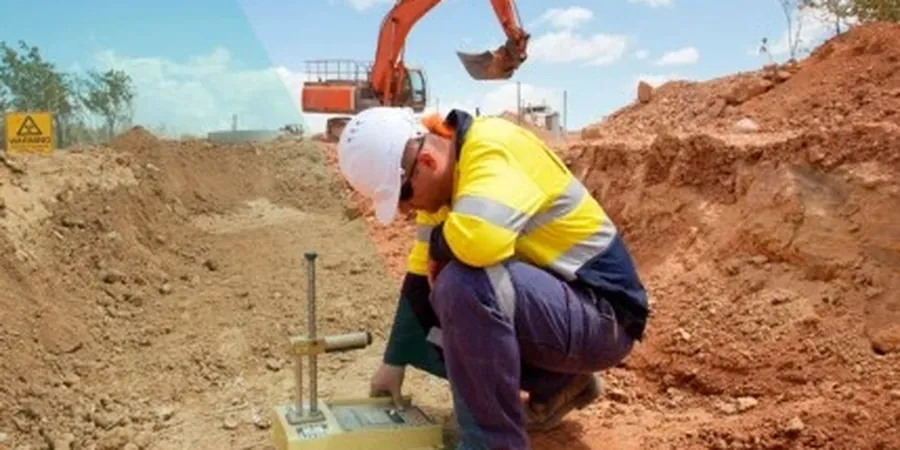
Subgrade CBR values in Gold Coast can vary from 2% in alluvial flats to 15% on basalt, requiring site-specific pavement design.
Methodology and scope
Local considerations
A common oversight in Gold Coast road projects is assuming uniform subgrade across the whole alignment. We have seen pavement failures within two years where a stiff subbase was placed over a soft clay pocket without adequate drainage. The risk is differential settlement and fatigue cracking. A targeted investigation with closely spaced boreholes and in-situ permeability tests reduces that uncertainty. The cost of fixing a failed pavement section far exceeds the cost of proper geotechnics upfront.
Explanatory video
Applicable standards
AS 1726:2017 Geotechnical site investigations, AS 1289 Methods of testing soils for engineering purposes, Austroads Guide to Pavement Technology Part 2: Pavement Structural Design, AS 2758.1:2014 Aggregates and rock for engineering purposes
Associated technical services
Subgrade Characterisation and CBR Testing
In-situ and laboratory CBR tests following AS 1289.6.1.1, including soaked and unsoaked conditions. We also perform dynamic cone penetrometer surveys to profile strength with depth and identify weak layers before they become problems.
Pavement Structural Design Support
Using Austroads mechanistic-empirical design procedures, we translate subgrade parameters into pavement layer thicknesses. This includes resilient modulus estimation, fatigue life analysis for asphalt, and subbase drainage checks.
Typical parameters
Frequently asked questions
What CBR value is typical for Gold Coast subgrades?
Typical CBR values range from 2% in the soft alluvial soils near the coast to 10–15% on the weathered basalt in the western suburbs. The actual value depends on moisture content and compaction effort, so site-specific testing is essential.
How much does a pavement geotechnical investigation cost in Gold Coast?
A standard investigation covering test pits, CBR tests, and laboratory classification typically costs between AU$1,400 and AU$6,840. The final price depends on the number of test locations, depth of investigation, and whether specialised tests like resilient modulus are required.
When should I use a plate load test instead of CBR for pavement design?
Plate load tests are preferred when the design relies on the in-situ modulus of reaction, such as for rigid pavements or heavily loaded industrial slabs. CBR is more common for flexible pavement design in Gold Coast. The choice depends on the pavement type and the expected traffic loading.