Gold Coast sits on a mix of weathered rhyolite, colluvium, and coastal sands, with over 70% of the region classified as steep terrain. That combination makes slope stability analysis a critical step before any excavation or fill operation. We have seen too many retaining walls crack and hillsides slide because the subsurface conditions were assumed rather than tested. Our team runs a full suite of field and lab tests to quantify shear strength, pore pressure, and soil layering. For soft ground we often pair this with a vibrocompaction program to densify loose fills before final grading. Each project follows AS 4678-2002 and the Gold Coast City Council planning guidelines for earthworks.
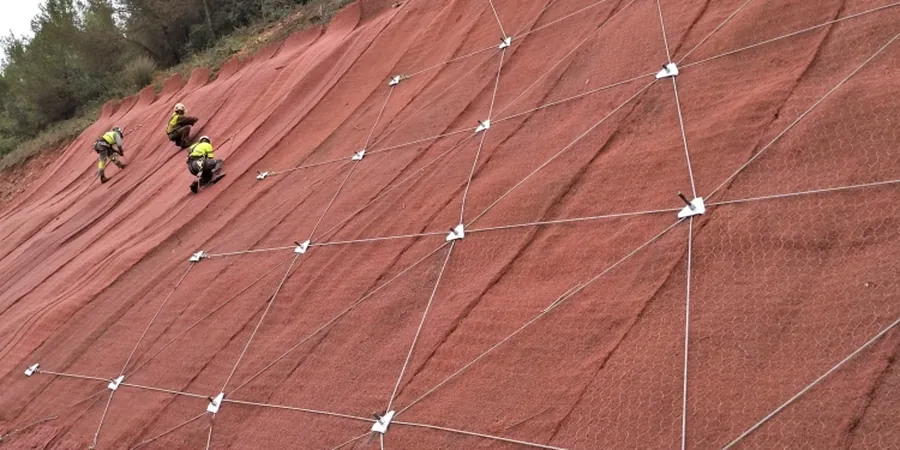
We have seen retaining walls crack and hillsides slide because subsurface conditions were assumed rather than tested — that is what slope stability analysis prevents.
Methodology and scope
- shear strength parameters (c', phi')
- groundwater regime and seepage analysis
- factor of safety for static and seismic conditions
- remediation options with costed alternatives
Local considerations
A common mistake we see on Gold Coast hillside projects is assuming the natural angle of repose is safe for permanent cuts. Builders sometimes trim a slope to 45 degrees without testing the residual shear strength of the weathered rhyolite. Within one wet season the face ravels and tension cracks appear at the crest. That leads to emergency shoring, delays, and council enforcement. A proper slope stability analysis catches those weak layers before the excavator arrives. We have worked on sites in Tallebudgera, Burleigh, and Mudgeeraba where a $4,000 analysis saved $80,000 in reactive repairs. The cost of guessing is always higher than the cost of testing.
Applicable standards
AS 4678-2002 (Earth retaining structures), AS 1726-2017 (Geotechnical site investigations), AS/NZS 1170.0:2002 (Structural design actions – general principles)
Associated technical services
Slope Stability Modelling & Reporting
Full numerical modelling using SLOPE/W or Slide2, including sensitivity analysis on shear strength and groundwater. Deliverables include cross-sections, failure mechanisms, and a ranked list of remedial options with estimated costs.
Remediation & Monitoring Support
Design of soil nail walls, geogrid-reinforced slopes, or drainage systems. We also install inclinometers and piezometers for long-term movement and pore pressure monitoring post-construction.
Typical parameters
Frequently asked questions
What is the typical cost range for a slope stability analysis in Gold Coast?
For a standard residential lot with 2-3 boreholes and lab testing, the analysis ranges from AU$1,790 to AU$7,330 depending on site access, depth, and complexity of the failure model. We provide a fixed-price quote after the initial site walkover.
How long does a slope stability analysis take from site visit to report?
Fieldwork typically takes one to two days. Lab testing adds another 5-7 working days for direct shear or triaxial. The modelling and report are usually ready within 10-12 business days from the start of drilling.
Does Gold Coast City Council require a slope stability analysis for all hillside developments?
Yes, for any development on land with a slope steeper than 15% or in a designated landslide-prone area. Council refers to the Gold Coast City Plan 2020, which mandates a geotechnical report signed by an RPEQ engineer for cut-and-fill operations exceeding 1 metre.
What is the difference between a factor of safety of 1.3 and 1.5?
A factor of safety of 1.3 means the slope is marginally stable and may fail under heavy rainfall or seismic shaking. AS 4678 recommends 1.5 for permanent cuts and fills. Anything below 1.3 triggers mandatory remediation before council approval.