In Gold Coast, many sites sit on steep terrain carved by ancient volcanic flows and coastal sediments. What we see most often is that developers underestimate how quickly heavy rain changes the soil's behavior. A proper slope failure analysis here isn't just a formality; it's the difference between a safe foundation and a costly slide. We start by reviewing the site's history, then run targeted field tests to understand the actual shear strength of the ground. For deeper insights, we often combine this with a resistivity survey to map subsurface layers without drilling, and a CPT sounding when we need continuous profiles through soft zones. Each Gold Coast property has its own geology, from the Tweed Shield Volcano remnants to the coastal dune systems, so the analysis must be local.
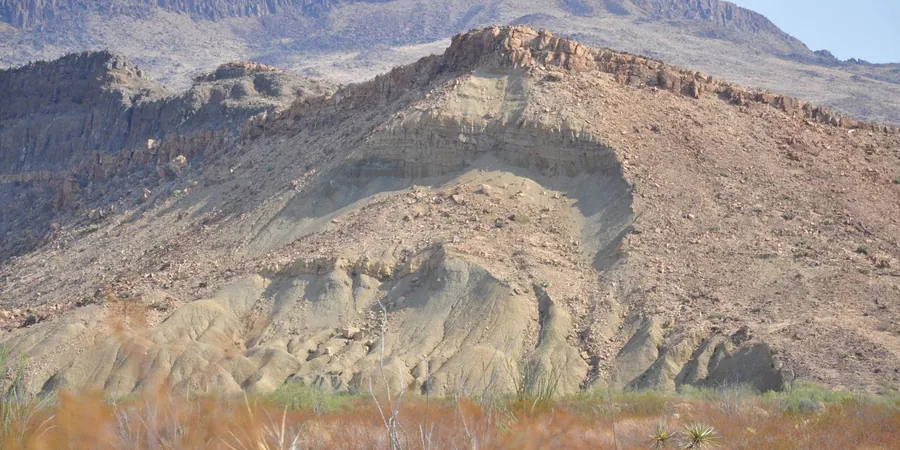
Gold Coast's combination of steep slopes, high rainfall, and reactive clays makes slope failure analysis a non-negotiable step before any excavation.
Methodology and scope
Local considerations
Gold Coast's development boom in the 1980s and 1990s pushed residential estates into the hinterland slopes, often without adequate geotechnical oversight. Today, many of those older subdivisions show signs of distress: cracked pavements, tilted fences, and occasional slips after heavy cyclonic rain. The city sits on a mix of highly weathered rhyolite and basalt, with colluvial deposits that become unstable when saturated. A slope failure analysis today must account for climate change projections, which predict more intense rainfall events. We've seen cases where a simple retaining wall failed because nobody checked the drainage behind it. That's why our approach always includes a full hydrogeological assessment alongside the stability calculations.
Applicable standards
AS 1726:2017 Geotechnical site investigations, AS 4678:2002 Earth-retaining structures, AS/NZS 1170.0:2002 Structural design actions (general principles)
Associated technical services
Detailed Slope Stability Modelling
Limit equilibrium and finite element analysis using Slide and RS2. We model multi-layered soil profiles, water tables, and surcharge loads to compute realistic factors of safety.
Field Investigation & Instrumentation
Boreholes, test pits, and installation of standpipe piezometers or vibrating wire sensors. We monitor pore pressure response during wet weather to calibrate our models.
Remediation Design & Review
If the factor of safety is below threshold, we design drainage systems, soil nails, or anchored retaining walls. We also review existing designs for compliance with AS 4678.
Typical parameters
Frequently asked questions
What triggers a slope failure in Gold Coast?
Most failures are triggered by prolonged rainfall that raises the groundwater table, reducing effective stress in the soil. In Gold Coast, the combination of high-intensity storms and reactive clay layers creates conditions where even gentle slopes can fail if drainage is inadequate.
How much does a professional slope failure analysis cost in Gold Coast?
The typical cost ranges from AU$1.330 to AU$3.590, depending on site size, number of boreholes, and whether instrumentation is needed. A simple residential lot with one borehole falls at the lower end; a large commercial cut with multiple piezometers sits at the upper end.
Is slope failure analysis mandatory for new developments?
Yes, for any site with a slope steeper than 15 degrees or where earthworks exceed 1 meter in cut or fill. Gold Coast City Council requires a geotechnical report under the Planning Scheme and references AS 4678 for retaining structures. Skipping it can lead to stop-work orders or costly retrofits.