We worked on a commercial site in Varsity Lakes last year where the contractor had already poured a slab on a silty sand subgrade. Within weeks, cracking appeared along the edges. The soil had enough fines to retain moisture but lacked cohesion under load. That job turned into a full lime stabilization treatment before the slab could be redone. In Gold Coast, where the water table sits close to the surface across most suburbs from Southport to Burleigh Heads, treating the ground chemically often makes more sense than exporting material and importing select fill. The local soils respond well to controlled additions of quicklime or cement, provided the mixing depth reaches the full active zone and the moisture content is measured accurately beforehand. We always run a study of compaction characteristics first to determine the optimum additive dosage for that specific lot.
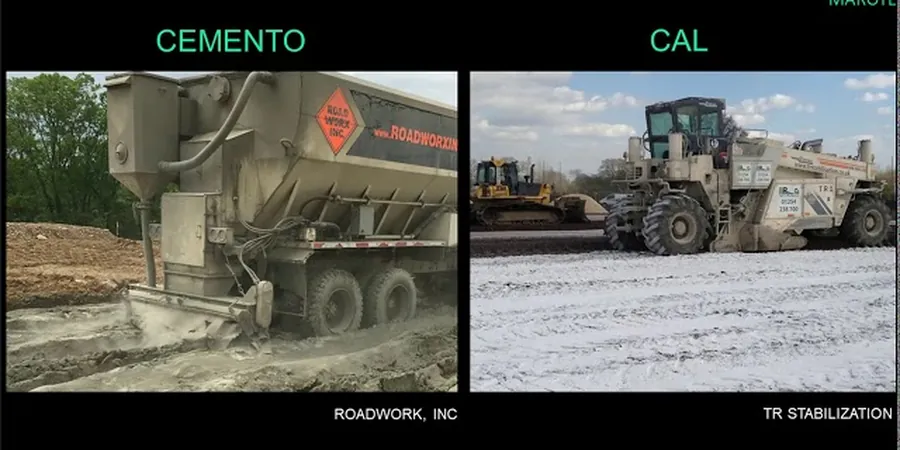
Treating the ground chemically often makes more sense than exporting material and importing select fill, especially in Gold Coast's wet coastal environment.
Methodology and scope
Local considerations
In Gold Coast, the biggest risk we see is treating the top 300 mm and leaving untreated material underneath. When the wet season hits, moisture migrates up through capillary rise and the untreated layer swells or softens, pushing the stabilized crust apart. Another common mistake is applying cement to organic soils without checking the organic content first — the reaction consumes the cement and you end up with a weak, friable layer. We also watch for sulfate attack in areas near tidal creeks; if soluble sulfates exceed 1%, lime can cause expansion instead of stabilization. That is why we always run a full chemical suite on the soil before recommending the additive type and dosage.
Applicable standards
AS 1289.5.1.1 (compaction control), AS 1289.3.6.1 (Atterberg limits), Austroads AG:PT05 (pavement materials guide), AS 1726 (geotechnical site investigation)
Associated technical services
Lime Stabilization for Expansive Clays
Application of hydrated lime or quicklime to reduce plasticity and shrink-swell potential. Suitable for the high-plasticity clays found in Helensvale, Coomera, and Ormeau. Includes laboratory mix design, field application supervision, and post-treatment CBR testing.
Cement Stabilization for Subgrades and Pavements
Portland cement addition to silty sands and low-plasticity clays to increase bearing capacity and reduce moisture sensitivity. Common in road projects along the Gold Coast Highway and industrial slabs in Yatala. Includes compaction control and strength verification at 7 and 28 days.
Typical parameters
Frequently asked questions
How deep can lime or cement stabilization treat the soil in Gold Coast?
Single-pass mixing with a pulverizer typically reaches 200 to 300 mm. For deeper treatment up to 600 mm, we use a two-pass method or a reclaimer/stabilizer. The depth depends on the equipment available and the project's bearing capacity requirements. We always verify the treated depth with test pits after mixing.
What does lime and cement stabilization cost in Gold Coast?
For a typical residential or commercial site, the cost ranges between AU$1,370 and AU$4,230 depending on the area treated, additive dosage, and whether laboratory mix design is included. The price varies with access conditions and the volume of material to be stabilized. We provide a fixed quote after the soil classification is complete.
How long does the stabilized soil take to cure before we can build on it?
Lime-stabilized soils usually require a minimum of 7 days of moist curing, while cement-stabilized soils can take 7 to 14 days depending on the ambient temperature and humidity. In Gold Coast's humid subtropical climate, curing times tend to be on the lower end during summer. We always perform a field strength check before the next construction stage begins.