In the field, our team deploys a 20-tonne track-mounted rig equipped with continuous sampling augers and hydraulic push equipment to investigate Gold Coast's coastal plain. The machine collects undisturbed tube samples and performs SPT at 1.5-metre intervals, which feeds directly into shallow foundation design parameters for residential slabs and commercial footings. Before we mobilise, we review existing borehole logs from nearby sites along the Nerang River corridor to refine our testing grid. Combining that historical data with fresh field work allows us to produce reliable bearing capacity estimates for each specific lot in Gold Coast.
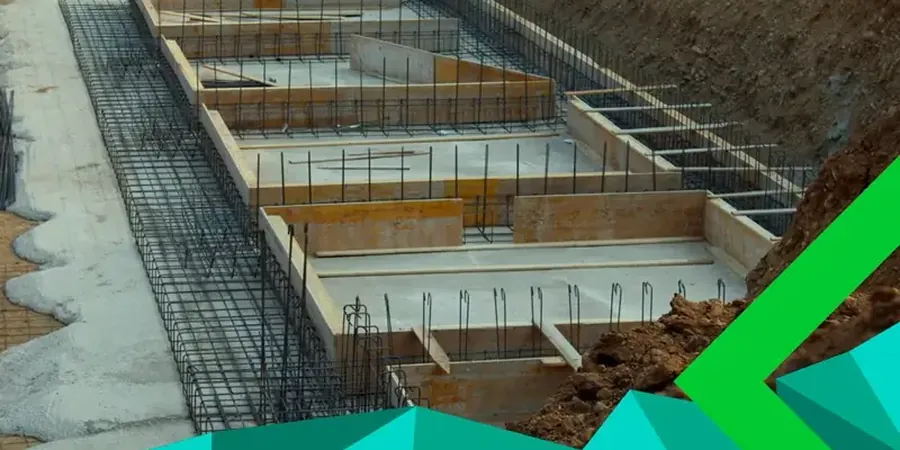
Gold Coast's Holocene sands demand cyclic loading verification – a standard triaxial test is rarely enough for coastal sites.
Methodology and scope
Local considerations
A common oversight in Gold Coast is assuming the top metre of desiccated clay provides adequate bearing capacity. In reality, that crust can soften rapidly after wet-season rains, leading to differential settlement under a slab. Our shallow foundation design reports explicitly flag this risk and recommend a minimum founding depth of 600 mm below finished ground level. We also check for shallow mine voids in the Beenleigh area, where historical quarrying left unrecorded cavities that can affect pad footings.
Applicable standards
AS 1726:2017 – Geotechnical site investigations, AS 2870:2011 – Residential slabs and footings, AS 4678:2002 – Earth retaining structures (dewatering adjacent), Eurocode 7 – EN 1997-1:2004 (bearing resistance verification)
Associated technical services
Site Classification & Bearing Capacity (AS 2870)
We classify sites from A to P based on reactivity, fill depth, and groundwater. Each report includes characteristic bearing capacity, estimated settlement, and recommended footing type – waffle raft, stiffened raft, or pad footings – with cross-section details.
Shallow Foundation Verification for Commercial Slabs
For warehouses and tilt-up panels, we perform plate load tests and dynamic cone penetration to confirm design assumptions. The final report provides allowable bearing pressure, modulus of subgrade reaction (k), and a settlement contour map for the slab layout.
Typical parameters
Frequently asked questions
What is the difference between allowable bearing capacity and ultimate bearing capacity in Gold Coast sands?
Ultimate bearing capacity is the load that causes shear failure in the soil, typically 300–500 kPa for dense Holocene sand. Allowable bearing capacity applies a safety factor (usually 2.5–3.0) to that ultimate value, giving a working stress around 120–200 kPa for residential slabs in Gold Coast.
How often should a shallow foundation be designed for Gold Coast's reactive clay sites?
Sites with high-plasticity clay (CH) require a stiffened raft or waffle raft to accommodate up to 45 mm of surface movement. We always run Atterberg limits and shrink-swell tests on clay samples before finalising the footing depth. AS 2870 provides the design curves for these soils.
What is the typical cost range for a shallow foundation design investigation in Gold Coast?
For a standard residential lot (one borehole to 6 m depth, lab testing, and report), the cost ranges between AU$3,320 and AU$4,740. Larger commercial sites with multiple boreholes and plate load tests can reach AU$8,500. Exact pricing depends on site access and testing scope.
Can shallow foundations be used on filled land in Gold Coast's canal estates?
Only if the fill is engineered, compacted to 95% standard Proctor density, and less than 2 m thick. We require continuous CPT or SPT every 1.5 m to verify density. If the fill is uncontrolled or contains organic debris, we recommend piling or ground improvement instead of shallow foundations.