Gold Coast's rapid growth from a small holiday destination into a major urban centre has placed considerable demands on its coastal and hinterland soils. The city's development across dune systems, tidal flats, and former agricultural land means geotextile specification is rarely straightforward. We have worked on numerous projects here where the wrong fabric choice led to clogging or loss of separation within a single wet season. That is why we approach each specification by first reviewing the site's particle size distribution and groundwater regime, then matching the geotextile's permittivity, grab strength, and puncture resistance to the actual conditions. Before committing to a fabric type, we often recommend a permeability field test to confirm the soil's hydraulic conductivity aligns with the filter criteria, and a granulometry to define the gap-graded zones that can cause internal instability.
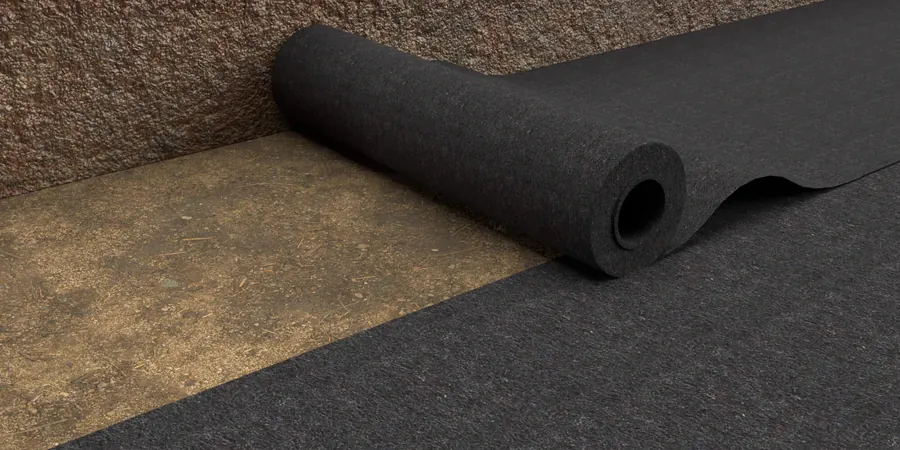
The wrong geotextile can clog in one wet season. We match permittivity, grab strength, and AOS to the actual Gold Coast soil.
Methodology and scope
- Apparent Opening Size (AOS) – must retain 90% of the soil without blinding
- Permittivity – must exceed the soil's hydraulic conductivity by a factor of 10
- Grab tensile strength – typically 700–1400 N for separation, higher for reinforcement
- UVC resistance – essential for exposed applications on Gold Coast's sunny coastline
Local considerations
Comparing sites in Surfers Paradise versus the hinterland near Springbrook reveals a sharp contrast in geotextile requirements. The coastal strip has clean quartz sands with high permeability, so a relatively open fabric (AOS 0.3 mm) works well for filtration. In the hinterland, residual clay soils from weathered rhyolite contain fine silt fractions that can blind a geotextile in months if the permittivity ratio is too low. We have seen failures where a contractor used a single fabric type across both zones, resulting in clogging on the clay sites and excessive turbidity on the sand sites. That is why we insist on site-specific testing before finalising any geotextile specification in Gold Coast.
Applicable standards
AS 4678-2002: Earth-retaining structures (geotextile selection criteria), AS 1289: Standard test method for apparent opening size, AS 1289: Standard test method for permittivity of geotextiles, FHWA NHI-07-092: Geosynthetic design and construction guidelines
Associated technical services
Geotextile selection and design review
Our team reviews your project's soil properties, groundwater conditions, and loading requirements to recommend the appropriate fabric class, opening size, and strength. We provide a written specification that meets AS 4678 and the project engineer's requirements.
On-site verification testing
We sample the delivered geotextile and test it against the specified parameters: AOS, permittivity, grab strength, and UV resistance. This step catches manufacturing defects or substitutions before the fabric is installed, saving costly rework.
Typical parameters
Frequently asked questions
How much does a geotextile specification review cost in Gold Coast?
A full specification review including soil data analysis and fabric selection typically ranges between AU$570 and AU$1,790, depending on site complexity and the number of fabric options evaluated.
What is the difference between a woven and non-woven geotextile for Gold Coast soils?
Woven geotextiles have higher tensile strength and are better suited for reinforcement and separation under traffic loads. Non-woven fabrics offer higher permittivity and are preferred for filtration and drainage applications, especially on the clayey soils common in Gold Coast's western suburbs.
Can I use the same geotextile for erosion control on a Gold Coast canal and a road embankment?
Unlikely. Canal erosion control requires a fabric with high UV resistance and open structure (AOS 0.4–0.8 mm) to allow vegetation growth, while road embankments need a tighter fabric (AOS 0.15–0.3 mm) for separation and filtration. We recommend separate specifications for each application.